
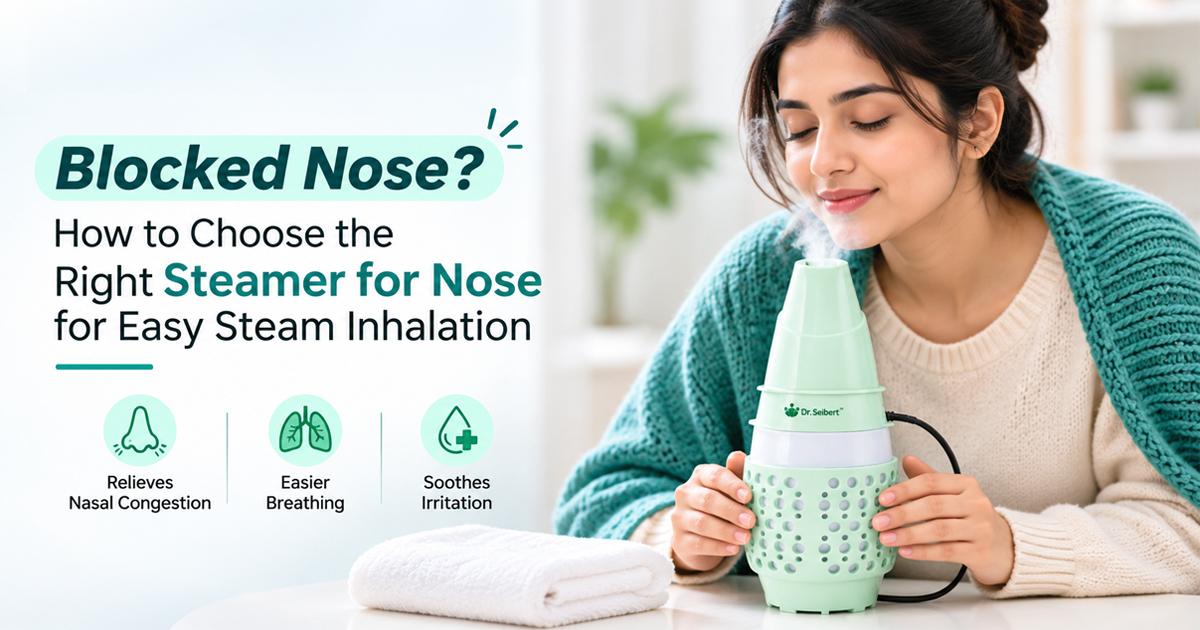
Blocked Nose? How to Choose the Right Steamer for Nose for Easy Steam Inhalation
A blocked nose can make even simple things feel hard. You struggle to sleep, your head feels heavy, and every breath seems like a small effort. Many families reach for a warm bowl of water and a towel, but a steamer for nose is a safer and more comfortable way to get the same relief.
This guide explains how nasal steam works, what to look for when buying a device and how to use it safely. It is written for ordinary households. So you can make a confident choice without getting lost in technical terms.
What Is a Steamer for Nose?
A steamer for nose is a small electric device that heats water and turns it into a fine, warm mist. You breathe in this mist through a mask or nozzle. The warm, moist air reaches your nasal passages and helps loosen thick mucus. So your nose feels less congested.
You may see it sold under different names, such as a steam sinus inhaler, a nasal steam machine or a steamer for face and nose. The basic idea is the same in all of them. A heating element makes steam and a controlled outlet delivers it to your face.
Compared with a bowl of hot water, these devices are much safer. A bowl can tip over and cause serious scalds, especially in homes with children.
How Does Steam Inhalation Help a Blocked Nose?
When you have a cold, allergy or sinus irritation, the lining of your nose becomes swollen and the mucus turns thick and sticky. Warm moist air can make the mucus thinner and easier to clear. It also keeps the nasal lining from drying out which often makes the nose feel more comfortable.
It is worth being honest about what steam can and cannot do. Research on steam inhalation has produced mixed results. Some people feel clear relief while studies have not shown that it cures a cold or an infection. Think of a steamer for nose block as a comfort measure. It can ease symptoms for a while but it does not treat the underlying cause.
Who May Find a Nasal Steam Machine Useful?
- People with a common cold or seasonal congestion
- Those who wake up with a dry or stuffy nose in winter
- People living in polluted or dusty areas, such as parts of Delhi NCR where nasal irritation is common.
- Anyone looking for a gentle, drug-free way to feel more comfortable alongside the treatment their doctor has advised.
Things to Check Before You Buy a Steamer for Face and Nose
Not every device is built the same. Here is what to look at before you decide.
1. Safety Features
This matters most. Look for an automatic shut-off when the water runs out a stable base that will not tip, and a cool-touch outer body. Overheating protection is also a good sign. If you plan to use the device around children or elderly family members. These features become even more important.
2. Steam Temperature and Output
The steam should be warm, not scalding. A good steam sinus inhaler lets the steam cool slightly before it reaches your face. Avoid devices that produce very hot, forceful steam, as they can irritate the nose and skin.
3. Mask and Nozzle Design
A soft, well-fitting mask makes a real difference. It should cover your nose comfortably without pressing hard on your face. Some models include separate attachments for the nose and the whole face, which is useful if you want both nasal relief and a facial steam session.
4. Material Quality
Choose a device made from BPA-free, food-grade or medical-grade plastic. Because hot steam passes through the material, quality matters for both safety and long-term use.
5. Ease of Cleaning
Water left sitting in a device can grow bacteria and mold. Pick a model with a removable water tank and parts that are simple to wash and dry. If cleaning feels like a chore, you are less likely to do it regularly.
6. Water Tank Size and Run Time
A small tank is fine for a single 10-minute session. A larger tank suits households where several people use the same device. Check how long one fill lasts before you buy.
7. Noise Level and Portability
If you plan to use it at night or while travelling, a quiet and lightweight design is helpful. Compact models are also easier to store.
8. Warranty and After-Sales Support
Buy from a reliable supplier who offers a warranty and clear support. A genuine product with proper guidance is always better than a cheap, unbranded one with no accountability.
How to Use a Steamer for Nose Safely
Follow these simple steps for a safe and comfortable session:
- Wash your hands and the device before use.
- Fill the tank with clean, fresh water. Distilled water is a good choice because it leaves less mineral residue.
- Place the device on a flat, stable surface.
- Switch it on and wait for the steam to start.
- Bring the mask or nozzle close to your face, keeping a comfortable distance at first.
- Breathe slowly and normally through your nose for about 5 to 10 minutes.
- Switch it off and let it cool completely before emptying the tank.
- Drink a glass of water afterwards to stay hydrated.
You can use it once or twice a day during a bout of congestion. If you feel dizzy, short of breath, or notice any irritation, stop at once.
Safety Precautions to Keep in Mind
- Never leave a child alone with the device.
- Do not add essential oils, medicated balms, or tablets to the water unless the manufacturer’s instructions say it is allowed. Many devices are not designed for them, and they can damage the machine or irritate your airways.
- Keep the steam away from your eyes.
- Empty and dry the device after every use.
- Anyone with asthma, a heart condition, very sensitive skin, or other long-term health problems should check with a doctor before starting regular steam inhalation.
Steamer for Nose vs. Other Options
| Option | Best For | Main Limitation |
| Steamer for nose | Warm, moist relief for congestion | Does not treat the cause |
| Saline nasal spray | Daily rinsing and moisture | Short-lived relief |
| Humidifier | Keeping room air comfortable | Not targeted to the nose |
| Hot water bowl | Cheap and easy | Risk of scalds and spills |
A steamer is not a replacement for medical care, but it fits well alongside rest, fluids, and any treatment your doctor recommends.
Common Mistakes to Avoid
- Using tap water with heavy mineral content, which can leave deposits inside the device
- Sitting too close to the steam outlet
- Using the device for very long sessions
- Skipping cleaning between uses
- Expecting a cure instead of temporary relief
Final Thoughts
A good steamer for nose can bring real comfort when congestion makes the day or night difficult. The right choice comes down to safety features, steam quality, a comfortable mask and ease of cleaning. Whether you are looking for a steamer for face and nose a steamer for nose block, a steam sinus inhaler or a nasal steam machine, take your time to read the product details carefully and buy from a trusted medical equipment supplier.
Use it sensibly, keep it clean and see a doctor if your symptoms do not improve. That way, you get the comfort without the risk.
Frequently Asked Questions
Is a steamer for nose safe for children?
It can be used for older children under close adult supervision, but you should check with a paediatrician first. Never leave a child alone with the device.
How often can I use a nasal steam machine?
Most people use it once or twice a day for 5 to 10 minutes while they have congestion. Follow the manufacturer’s guidance.
Can I add Vicks or essential oils to my steam sinus inhaler?
Only if the product instructions specifically allow it. Many devices are not made for additives.
Does steam inhalation cure sinusitis?
No. It may ease the discomfort, but sinusitis can need medical treatment. See a doctor if symptoms persist.
Can I use a steamer for face and nose for skincare too?
Many models can be used for facial steaming as well. Keep sessions short, and avoid it if your skin is very sensitive or inflamed.