
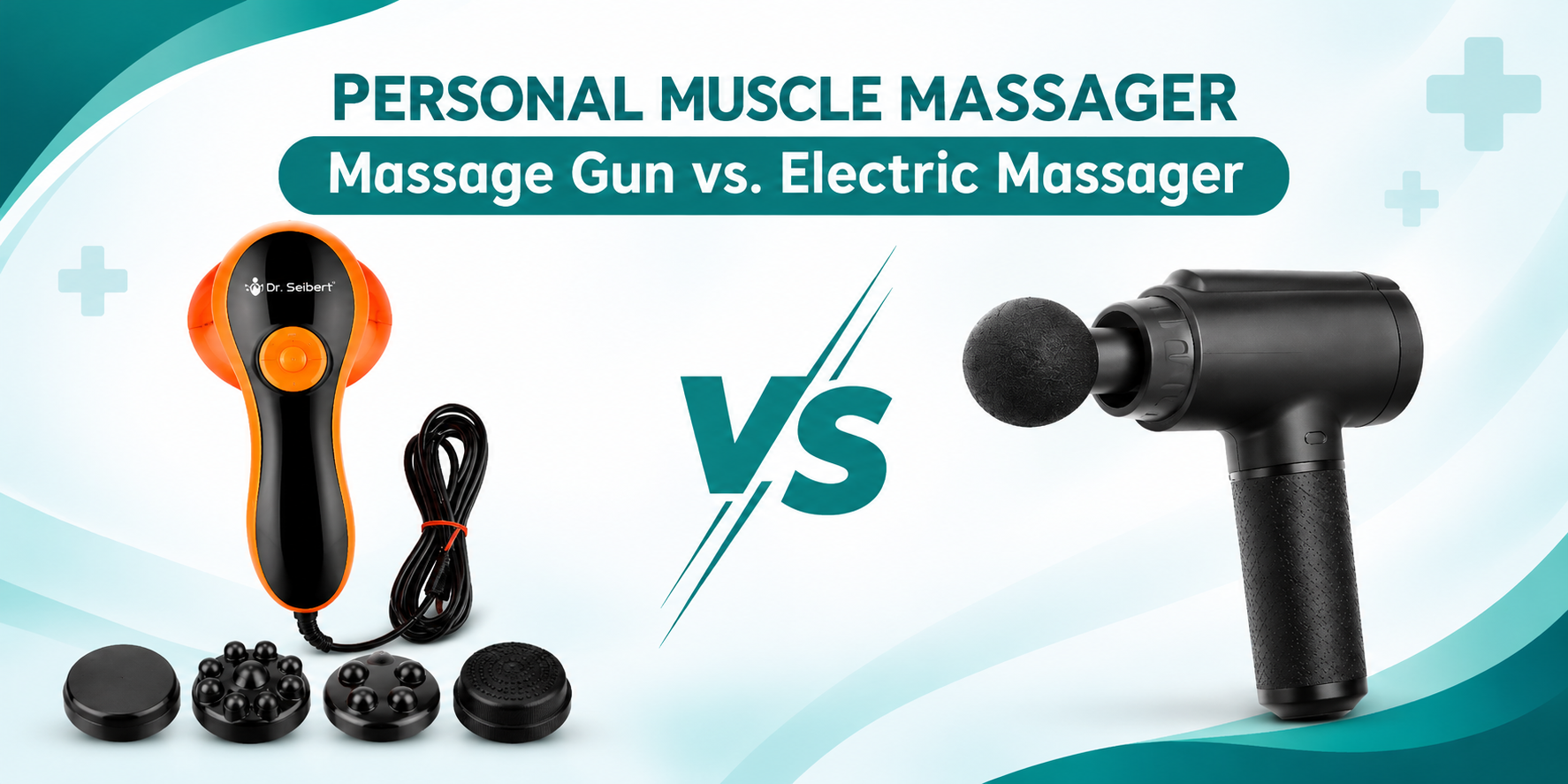
Personal Muscle Massager: Massage Gun vs. Electric Massager – Which Is Better for Everyday Muscle Pain and Recovery?
Muscle pain and stiffness have become part of daily life for many people. Long hours at a desk, poor posture, constant phone use, intense workouts and even stress can leave your neck, shoulders, back and legs feeling tight and sore. Over time this tension can affect your mood, sleep and productivity.
This is where a personal muscle massager can make a real difference These devices apply targeted pressure and vibration to the muscles. It helps improve blood flow, ease tightness and speed up recovery after a long day or a tough workout. Instead of booking regular sessions at a spa or clinic. You can enjoy relief at home, whenever you need it.
What Is a Personal Muscle Massager?
A personal muscle massager is a compact, easy-to-use device designed to relieve muscle tension soreness and stiffness without a visit to a therapist. It delivers pressure vibration or percussion to targeted areas of the body, helping muscles loosen up and recover faster. Whether you are dealing with a stiff neck after long hours at a desk or sore legs after a workout, it offers quick relief at home.
How Personal Massagers Work
Most devices work by stimulating the soft tissue through rapid movement or vibration. This stimulation helps increase blood circulation, which brings more oxygen and nutrients to tired muscles. Better blood flow can reduce tightness, ease discomfort and support natural recovery.
Different Types Available for Home Use
When you explore personal massagers for sale, you will come across several popular types:
- Massage guns: Handheld devices with percussive action and interchangeable heads. They are ideal for deep muscle recovery and targeting specific knots.
- Electric handheld massagers: Lightweight devices with gentle vibration, suitable for daily relaxation and sensitive areas.
- Neck and shoulder massagers: Designed to fit the natural curve of the upper body and ease desk-related stiffness.
- Back massagers: Include cushion-style, strap-on or wand-type options for larger muscle groups.
- Foot and leg massagers: Help relieve tired, swollen legs after standing or walking all day.
- Mini portable massagers: Compact and rechargeable, perfect for travel, the office or the gym bag.
Common Uses for Muscle Relaxation and Comfort
People use a personal muscle massager for many everyday needs, such as:
- Relieving neck, shoulder and back stiffness from sitting for long hours
- Warming up muscles before exercise
- Speeding up recovery after workouts
- Easing leg fatigue after a long day on your feet
- Relaxing the body before bedtime for better rest
- Reducing stress and improving overall comfort
Comparison: Massage Gun vs. Electric Massager
Choosing between a massage gun and an electric massager depends on your comfort level, your daily routine and how much muscle tension you deal with. Here is a side-by-side look to help you pick the right personal muscle massager for your needs.
Features and Functions
Massage gun: Uses a fast and percussive (hammering) motion that reaches deep into the muscle tissue. Most models come with multiple speed levels and interchangeable heads for different body areas, such as the neck, back ,calves and thighs. This makes it a strong choice for stubborn knots and post-workout recovery.
Electric massager: Typically uses gentle vibration, kneading or rolling motion. Many models are designed for specific areas, such as the neck, back or feet. They work on the surface and mid-level muscles, which makes them suitable for daily relaxation and mild stiffness.
Ease of Use
Massage gun: Slightly more of a learning curve. You need to glide it slowly over the muscle and avoid bones, joints and sensitive areas. Reaching your own upper back can also be tricky.
Electric massager: Very beginner-friendly. Cushion-style, strap-on and wand-type models are simple to position and often allow hands-free use. This makes a personal body massager of this kind a comfortable option for first-time users and older adults.
Battery Life and Charging
Massage gun: Most rechargeable models run for about 2 to 6 hours on a full charge or depending on the speed and battery size. They usually charge through USB-C or a standard adapter.
Electric massager: Battery life varies by type. Compact handheld models are rechargeable while larger cushion or chair-style massagers often need to stay plugged in during use. Corded options give you unlimited run time but less portability.
Noise Levels
Massage gun: Stronger motors can be louder, especially at high speeds. Many newer models include quiet-motor technology so check the noise rating when browsing personal massagers for sale.
Electric massager: Generally quieter, since vibration and kneading motions produce less sound. This makes them better for use while watching TV, working at a desk or relaxing before bed.
Price and Maintenance
Massage gun: Prices range widely, from budget-friendly models to premium ones with advanced features. Maintenance is simple: wipe the device clean, keep the heads sanitized, charge the battery regularly and store it in its case.
Electric massager: Often more affordable at the entry level, though large chair or cushion models can cost more. Maintenance is minimal. Keep it clean, check cords and covers for wear and avoid moisture.
Quick Comparison Table
| Factor | Massage Gun | Electric Massager |
| Massage style | Deep percussive therapy | Gentle vibration or kneading |
| Best for | Athletes, deep knots, recovery | Daily relaxation, mild stiffness |
| Ease of use | Moderate | Very easy |
| Battery | Rechargeable, portable | Rechargeable or corded |
| Noise | Can be louder | Generally quieter |
| Price | Budget to premium | Budget to mid-range |
| Maintenance | Clean heads, charge battery | Clean surface, check cords |
Common Mistakes to Avoid When Using a Massager
Even the best personal muscle massager can cause discomfort if it is not used correctly. A few simple habits can help you get better results and stay safe. Here are the most common mistakes to avoid.
Applying Excessive Pressure
Many people believe that pressing harder gives better results, but this is not true. Too much pressure can bruise the skin, irritate the muscles and leave you feeling sorer than before. Let the device do the work. Rest it lightly on the muscle and glide it slowly. If you are using a massage gun, start at the lowest speed and increase gradually only if it feels comfortable. A good personal body massager should leave your muscles feeling relaxed, not painful.
Using It on Injured or Swollen Areas
A massager is meant for general muscle tightness and soreness, not for injuries. Avoid using it on:
- Fresh sprains, strains or torn muscles
- Swollen, inflamed or bruised areas
- Open wounds, rashes or sensitive skin
- Bones, joints and the front of the neck
Massaging an injured area can increase inflammation and delay healing. If you have a medical condition, are pregnant or have ongoing pain, speak with a doctor before using any device.
Using It for Too Long
More time does not mean more relief. Overusing a massager on one spot can cause soreness, numbness or muscle fatigue. As a general guide, spend about 30 to 60 seconds on a small muscle area and no more than 10 to 15 minutes in total per session. Take a break if you feel tingling or discomfort. This is especially important when you buy from the many personal massagers for sale that offer high-intensity modes.
Ignoring Product Instructions
Every device is built differently so the user manual matters. Skipping it can lead to improper use, damage to the device or even injury. Always check:
- Recommended usage time and speed settings
- Which attachments or heads suit which body areas
- Charging and battery safety guidelines
- Cleaning and storage instructions
Frequently Asked Questions (FAQs)
1. Is a massage gun better than an electric massager?
It depends on your needs. A massage gun gives deep percussive relief for knots and post-workout recovery. While an electric massager offers gentle vibration for daily relaxation. When checking personal massagers for sale, choose based on the intensity you need.
2. How often can I use a personal muscle massager?
Once or twice a day is usually fine. Keep each session to 10 to 15 minutes and with a personal muscle massager 30 to 60 seconds on each muscle area.
3. Can a personal body massager help with workout recovery?
Yes. A personal body massager improves blood flow, eases tightness and reduces post-workout soreness.
4. Is a massage gun safe for the neck?
Use extra care. Avoid the front and sides of the neck and the spine. Stick to the back of the neck and shoulders at the lowest speed.
5. Which is better for beginners?
An electric massager is easier to use and often hands-free. A massage gun works well once you get used to it.